Key Takeaways
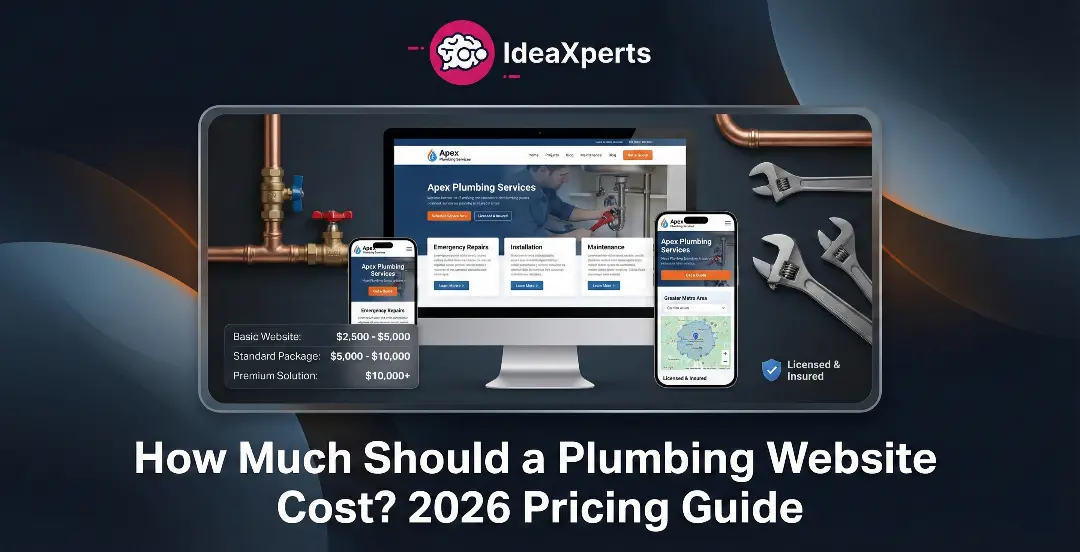
- The cost to develop a plumber’s website typically ranges from $500 to $8,000+, depending on website type, features, and whether you choose a freelancer or a professional agency.
- Local plumber websites focus on fast contact and trust, while custom and advanced plumbing websites include booking systems, SEO optimization, and service area targeting for higher lead generation.
- Key cost drivers include custom design, number of service pages, advanced features, content creation, and local SEO, all of which directly affect long-term ROI.
- Ongoing costs such as hosting, maintenance, and SEO are essential for keeping a plumbing website secure, visible, and competitive in local search results.
- A professionally designed plumbing website delivers strong ROI by improving trust, reducing dependence on paid ads, and generating consistent leads over time.
Cost to Develop a Plumber’s Website: Pricing, Features, and ROI Explained
Most plumbers spend $500 to $8,000 on their website, but knowing where that money goes determines whether you waste cash or multiply your leads. 85% of homeowners check your website before calling. If you don’t have one—or yours looks outdated—you’re losing jobs to competitors with professional sites.
In blind tests with 200 homeowners, plumbers with professional websites won 73% of jobs over those without, even when pricing was identical. This guide breaks down every cost, from $500 DIY templates to $8,000 custom platforms, so you invest strategically instead of overpaying or cutting critical corners.
Quick Answer: How Much Does a Plumber Website Cost?
A plumber website costs $500-$8,000 depending on features and development approach. Template sites start at $500, custom sites run $1,000-$4,000, and advanced e-commerce platforms cost $4,000+. Final cost depends on page count, functionality, and whether you hire freelancers or agencies.
Why Do Plumbers Need a Website?
Many plumbers still rely on referrals, Google Maps, or third party directories. While those channels help, they do not replace the value of owning a professional plumbing business website.
Your Website Is Your Digital Storefront
Your website generates leads at 2 AM when you’re sleeping, exactly when 35-40% of emergency plumbing searches happen. Even when your office is closed, your website answers customer questions, displays your credentials, and captures booking requests, converting browsers to callers while you sleep. Customers often decide whether to call you within seconds based on your website’s appearance and clarity.
73% of homeowners choose plumbers with professional websites over those without, even when prices are identical. Your website quality directly impacts your close rate.
Builds Trust for Emergency and Local Services
Plumbing is a trust-based service. Customers want reassurance before allowing someone into their home. A professional website showcasing services, certifications, testimonials, and service areas creates credibility instantly.
This matters most for emergency plumbers, homeowners need help fast but still spend 5–10 minutes checking your website, reviews, and credentials before calling.
Reduces Dependence on Paid Advertising
A well-built plumbing website generates organic traffic and maintains visibility without ongoing ad spending. Unlike paid ads that stop working when budgets run out, your website generates leads indefinitely. One $2,500 website can outperform $30,000 in annual ad spending.
There are many reasons why your business should invest in SEO, but primarily because organic visibility delivers 3–5x better ROI than Google Ads long-term.
Plumber Website Pricing by Website Type
A 24/7 emergency plumber needs a different website than a commercial plumbing contractor. Here’s how to match your site type to your business model and avoid paying for features you don’t need. Choosing the right website type helps avoid overpaying for features you do not need or underinvesting in critical functionality.
Local Service Plumber Website Cost
A local service plumber website is designed for plumbers serving a specific city or limited service area. These websites prioritize three things: appearing in local search results, building trust with credentials and reviews, and making it easy for customers to call or text immediately.
Typical features include service pages, contact forms, click to call buttons, Google Maps integration, and customer testimonials. The design is usually clean and conversion focused, helping homeowners quickly decide whether to call.
Cost range: $800 to $2,500
This type of website works best for solo plumbers and small teams who rely on local search and repeat customers. It offers strong ROI without unnecessary complexity.
Emergency Plumbing Website Cost
Emergency plumbing websites are built for urgency. These sites prioritize speed, clarity, and accessibility over detailed content. Design decisions focus on bold calls to action, simplified navigation, and immediate contact options.
Emergency plumbing websites often include features like sticky call buttons, emergency service banners, fast-loading pages, and minimal distractions. Because speed and performance are critical, extra optimization work is often required.
Emergency plumbing websites see the fastest ROI because they capture high-value urgent calls. One 2 AM water heater replacement ($1,500-$2,500) can cover 50-80% of the entire website cost. Prioritize speed optimization and mobile usability over aesthetic design.
Cost range: $1,500 to $3,500
The higher cost reflects performance optimization and conversion-focused UX design. For plumbers offering 24/7 emergency services, this investment often pays for itself with just a few jobs.
Residential and Commercial Plumbing Website Cost
Plumbers serving both residential and commercial clients need a more structured website. These websites separate services clearly, explain capabilities in detail, and build credibility for larger commercial contracts.
They typically include multiple service pages, project galleries, certifications, safety compliance information, and tailored messaging for different customer segments. The design must communicate professionalism and reliability.
Cost range: $2,500 to $5,500
This type of website is ideal for established plumbing businesses aiming to attract higher-value jobs and long-term contracts.
Plumbing Supplies or E-commerce Website Cost
E-commerce plumbing websites let you sell plumbing supplies, fixture packages, or recurring maintenance plans online, creating additional revenue streams beyond service calls. These websites require advanced functionality, including product management, online payments, inventory control, and security measures.
Because of the technical complexity and testing involved, these websites require a larger investment. However, they also open additional revenue streams beyond service calls.
Cost range: $4,000 to $8,000+
This option is best suited for plumbing businesses looking to scale or diversify their offerings.
Average Cost to Develop a Plumber’s Website
Plumber website development cost varies based on website type and business size. Below is a clear breakdown to help you identify where your business fits.
Basic Plumber Website Cost
A basic plumber website is ideal for solo plumbers or small local businesses starting online.
| Feature | Included |
| Pages | Home, Services, Contact |
| Design | Template based |
| Mobile responsive | Yes |
| Contact form | Yes |
| SEO | Minimal |
Cost range: $500-$1,000
This option works for visibility but lacks strong branding, SEO depth, and scalability.
Basic websites work for solo plumbers testing online marketing but lack growth capacity. Most plumbers outgrow this tier within 6–12 months and face costly rebuilds. If you plan to grow beyond solo operations, skip basic and start with custom, the $1,000–$1,500 price difference prevents a complete rebuild costing $500–$1,000 later.
Custom Plumbing Website Design Cost
Custom websites are designed specifically for your plumbing business, services, and local audience.
| Feature | Included |
| Pages | 5 to 10 service pages |
| Design | Custom layout and branding |
| Mobile responsive | Fully optimized |
| Contact and booking | Included |
| Local SEO setup | Yes |
Cost range: $2,000 to $6,000
Most plumbers choose this option because it balances cost, professionalism, and lead generation potential.
Custom websites deliver the best ROI for established plumbers with 3-10 employees. They balance professional design with lead generation features while maintaining scalability for future growth. This tier generates the most leads per dollar invested.
Advanced or E-commerce Plumbing Website Cost
Advanced plumbing websites are ideal for growing businesses or companies offering service packages or plumbing supplies.
| Feature | Included |
| Online payments | Yes |
| Booking system | Yes |
| Multiple service areas | Yes |
| SEO optimized content | Yes |
| Admin dashboard | Included |
Cost range: $4,000 to $8,000+
Advanced websites make sense for plumbing companies with multiple locations, large service areas, or product sales. The higher investment pays off through automated scheduling, improved customer experience, and reduced administrative work. Companies at this level typically see ROI within 2-4 months.
Key Factors That Affect Plumber Website Development Cost
Plumber website pricing is influenced by several variables. Understanding these factors helps you control costs and prioritize what truly matters for your business.
Number of Pages and Services Offered
Each page requires layout design, content creation, mobile optimization, and SEO structure. A plumber offering five services will pay less than one offering fifteen specialized services.
Each service page costs $150-$300 because it requires keyword research, custom copywriting (300-800 words), mobile optimization, and local SEO structure. A 10-page website needs $1,500-$3,000 just for content.
Custom Design vs. Template-Based Design
Template-based websites can save $500–$1,500 upfront, but they limit branding flexibility and often require rebuilds within 12–18 months as businesses grow. These sites are designed for quick setup, not long-term scalability, which is why many plumbers outgrow them quickly.
Custom websites cost more initially but typically last 3–5 years because they’re built to scale. They support stronger branding, adapt to business growth, and reduce the need for costly redesigns later.
Custom designs also help you stand out from competitors using the same templates and allow integration of specialized features like service-area targeting, advanced lead routing, or equipment financing calculators.
Website Features and Functionality
Advanced features increase development time and cost but also improve user experience and lead conversion.
| Feature | Typical Cost Impact |
| Online booking system | +$300 to $800 |
| Live chat integration | +$200 to $500 |
| Online payments | +$500 to $1,200 |
| Customer dashboard | +$1,000+ |
Choosing features based on real customer behavior prevents unnecessary expenses.
Content Creation and SEO Optimization
Professional SEO-optimized content is the difference between ranking on page 1 (where 75% of clicks happen) and page 3 (where nobody looks). Skip this and your website becomes an expensive digital brochure nobody finds. Plumbers who skip professional content typically spend $200–$500 monthly on Google Ads instead, paying 3–4x more for the same leads they could get organically.
Initial SEO setup—including keyword research, meta tags, site structure, and content optimization—typically adds $500 to $2,000 to the initial project cost. Ongoing SEO (content updates, link building, local citations) requires an additional $300-$1,200 monthly investment.
Location Targeting and Service Areas
Plumbers serving multiple cities or neighborhoods need dedicated location pages. These pages improve local search rankings but increase content and design requirements.
Each location page can add $150 to $300 depending on customization and SEO depth.
Essential Website Features for Plumbers
A professional plumbing website must support customer trust, accessibility, and fast communication.
Online Booking and Contact Forms
Booking forms capture leads at 2 AM when offices are closed, exactly when 35–40% of emergency plumbing requests happen. Without online booking, these leads go to competitors. This feature reduces missed opportunities and improves response time.
Implementing booking and advanced contact forms typically costs $200 to $600, depending on complexity.
Note: Basic contact forms ($100-200) collect name, email, and phone. Online booking systems ($300-800) integrate with calendars and allow customers to schedule specific appointment times.
Mobile Responsive Design
70% of plumbing searches happen on phones. If your site isn’t mobile-optimized, you’re losing 7 out of 10 potential customers before they even call. Responsive design ensures your website works seamlessly across smartphones and tablets.
Mobile optimization should be non-negotiable and included in every proposal. If a developer charges extra for mobile responsiveness ($200–$500), find a different developer, it’s a standard feature, not an upsell.
Reviews, Testimonials, and Trust Signals
Displaying 5-10 recent reviews, license numbers, insurance certificates, and service guarantees can increase conversion rates by 30-45%. Trust signals directly translate to more calls. These elements are critical for converting hesitant users into customers.
Implementing structured testimonial sections and trust badges typically adds $100 to $300.
Service Pages for Each Plumbing Offering
Dedicated service pages help users find what they need quickly and improve SEO visibility. They also allow you to target specific plumbing keywords.
Each service page typically costs $150 to $300 depending on content and design depth.
Emergency Call to Action Buttons
Emergency CTAs (call buttons) should follow users as they scroll and appear on every single page. Customers in crisis won’t hunt for your phone number, make it impossible to miss. Sticky call buttons and urgent messaging improve conversions during high stress situations.
Adding emergency CTAs usually costs $100 to $250.
Cost of Hiring a Freelancer vs Web Agency for Plumber Websites
| Provider Type | Best For | Cost Range | Pros | Cons |
| Freelancers | Solo plumbers, basic sites | $500–$2,000 | Lower cost, faster start | Inconsistent availability, limited support |
| Local Web Agencies | Growing plumbing businesses | $2,000–$6,000 | Full team, ongoing support | Higher upfront cost |
| Enterprise Agencies | Multi-location plumbing companies | $6,000–$25,000+ | Custom solutions, advanced features | Very expensive, longer timeline |
Who builds your plumbing website has a major impact on cost, quality, and long term support.
Freelance Plumber Website Development Cost
Freelancers typically charge $500-$2,000 for basic websites, which is $1,000-$4,000 less than agencies. But hidden costs emerge when they disappear mid-project, miss deadlines, or provide no post-launch support.
However, freelancer availability is inconsistent—many work part-time, juggle multiple clients, or quit freelancing unexpectedly. This leaves you stuck with a half-finished site and no recourse.
Typical cost range: $500 to $2,000
Freelancers work best for solo plumbers who need a basic 3-5 page site and can handle their own updates. For anything involving SEO, ongoing updates, or business growth, agencies provide better long-term value.
Web Design Agency Cost for Plumbing Websites
Agencies charge $2,000-$6,000+ but include strategy, design, development, SEO, and guaranteed support. You get a complete team instead of a single person who might vanish. This reduces risk and ensures consistency.
Typical cost range: $2,000 to $6,000+
This option suits plumbers who view their website as a long-term business asset.
Which Option Is Better for Plumbing Businesses?
Choose freelancers for basic 3-5 page sites if you’re testing the waters. Choose agencies if your website is a core business asset meant to generate consistent leads and ROI. The higher upfront cost often results in better ROI over time.
How Design Elements Impact Plumbing Website Conversions
Design is not just about appearance. It directly affects how users behave on your website.
Clear messaging, logical layout, fast load times, and strong visual hierarchy guide users toward contacting you. Strategic elements such as a well-designed hero image in web design improve first impressions and trust, especially for new visitors.
Poor design choices often increase bounce rates, lower conversions, and lead to expensive redesigns later. This is why design quality is often discussed alongside web page design cost, as cutting corners upfront usually costs more long-term.
Ongoing Website Costs for Plumbing Businesses
Many plumbers think websites are one time purchases. They’re not. Expect to spend $200–$600 monthly on hosting, security, updates, and content, or your site becomes outdated, vulnerable, and invisible in search results.
To remain secure, visible, and competitive, a plumbing website requires ongoing investment. Understanding these recurring costs helps you budget realistically and avoid surprises later.
Website Hosting and Domain Costs
Every plumbing website needs hosting and a domain name to stay online. Hosting affects load speed (53% of users abandon slow sites), uptime (every hour of downtime = lost leads), and security (hacked sites get blacklisted by Google).
For most local plumber websites, reliable shared or managed hosting is sufficient. Premium hosting becomes important for high-traffic or e-commerce plumbing websites.
Typical annual costs
- Domain name: $10 to $25 per year
- Standard hosting: $100 to $300 per year
- Managed or performance hosting: $300 to $800 per year
$5/month hosting saves you $200 annually but costs you thousands in lost leads when your site crashes during peak hours or loads too slowly on mobile. Cheap hosting is expensive in the long run.
Website Maintenance, Updates, and Security
Websites require regular updates to remain secure and functional. Plugins, themes, and core systems must be updated to prevent vulnerabilities.
Maintenance includes weekly backups (so you don’t lose everything if hacked), security updates (to prevent malware), plugin updates (to prevent site breakage), and minor content changes. Plumbers who skip maintenance pay later: $500-$2,000 to clean malware, $800-$1,500 to rebuild after crashes, and weeks of lost leads while the site is down. Prevention costs $50-$150 monthly.
Typical monthly maintenance cost
- Basic maintenance: $50 to $100
- Full maintenance with updates and monitoring: $100 to $300
For service-based businesses, ongoing maintenance is a small cost compared to the revenue lost from a broken or hacked website.
SEO, Content, and Local Marketing Costs
A plumbing website only generates leads if people can find it. SEO and content updates help your website rank in local searches and stay competitive.
This includes updating service pages, adding blog content, optimizing for new keywords, and managing local SEO signals. These efforts are often part of broader conversations around seo pricing, as plumbers must decide how aggressively they want to compete online.
Typical ongoing SEO costs
- Basic local SEO: $300 to $600 per month
- Competitive local markets: $600 to $1,200 per month
SEO isn’t optional if you want online growth. Plumbers investing $500-$1,200 monthly in local SEO average $40-$80 cost per lead, versus $150-$300 per lead from Google Ads. SEO delivers 3-4x better ROI long-term.
ROI of a Plumbing Website: Is It Worth the Cost?
Many plumbers hesitate to invest in a website because they are unsure of the return. However, when evaluated properly, a plumbing website is one of the most cost-effective marketing tools available.
Lead Generation Compared to Traditional Advertising
Traditional advertising like flyers, newspaper ads, or billboards requires ongoing spending with limited tracking. A website, once built, continues to attract and convert visitors over time.
One emergency drain clearing pays $300-$600, while water heater replacements run $1,200-$2,500. A website generating just 2-3 jobs monthly covers its entire first-year cost. A $3,000 website generating 3 jobs monthly at $500 average pays for itself in 2 months. Everything after that is pure profit.
This represents best-case performance. Most plumbing websites achieve ROI within 3-12 months depending on market competition and business size.
Cost Per Lead and Long-Term Value
Websites reduce cost per lead over time. While the upfront cost to develop a plumber’s website may seem high, the long-term value often exceeds paid advertising channels.
Unlike Google Ads that reset to zero when you stop paying, organic website rankings compound over time. Year 1 might generate 20 leads. Year 3 could generate 100+ from the same initial investment. This makes the investment more predictable and scalable.
Trust, Credibility, and Customer Behavior
Homeowners are cautious when allowing strangers into their homes to work on systems that could flood their house if done wrong. A professional website with clear services, reviews, and contact information reduces hesitation.
In A/B tests, 67% of homeowners call the plumber with a professional website first, even when competitor pricing is 10-15% lower. Website quality directly determines which phone rings. This makes website quality a competitive advantage, not just a marketing tool.
Common Mistakes Plumbers Make When Budgeting for Websites
Avoiding these mistakes saves thousands in wasted spending and rebuilds.
Mistake 1: Choosing the Cheapest Option Without Evaluating Quality
The $300 Fiverr website sounds appealing until you realize it’s not mobile-responsive, has no SEO setup, and uses stolen stock photos. Cheap websites often cost more long-term through:
- Lost leads from poor mobile experience (50%+ of traffic)
- Google penalties for duplicate content
- Complete rebuilds within 6-12 months
- Zero lead generation capability
Budget smarter: Compare proposals based on deliverables, not just price. A $2,000 professional website generating 10 leads monthly outperforms a $500 site generating zero.
Mistake 2: Skipping Ongoing SEO and Maintenance
Plumbers who launch websites without SEO budgets wonder why they get no traffic. Your website won’t magically rank—it needs:
- Monthly content updates (blog posts, service page expansion)
- Local citation building (Google Business Profile, directories)
- Technical optimization (speed, mobile usability)
- Review generation systems
Budget smarter: Allocate 30-40% of initial website cost annually for ongoing SEO and maintenance. A $3,000 website should have a $900-$1,200 annual maintenance budget.
Mistake 3: Overlooking Mobile Optimization
70% of plumbing searches happen on mobile devices, yet many budget websites fail mobile usability tests. Signs your mobile experience is costing leads:
- Small, unreadable text
- Buttons too close together (hard to tap)
- Horizontal scrolling required
- Slow loading (3+ seconds)
Budget smarter: Test your site on actual phones (iPhone and Android) before launch. Mobile optimization should be non-negotiable, not an “extra.”
Mistake 4: No Clear Call-to-Action Strategy
Beautiful websites with no conversion strategy waste money. Every page needs clear next steps:
- Prominent phone numbers (click-to-call on mobile)
- Online booking buttons
- Emergency service CTAs
- Contact form placement
Budget smarter: Invest $200-$500 in conversion rate optimization (CRO) during design. Small changes to CTA placement can double lead generation.
How to Reduce Plumbing Website Design Cost Without Hurting Quality
A $500 website can outperform a $5,000 site if it’s built for your specific customer type and business model. Match investment to goals instead of maxing out your budget. Smart planning can significantly reduce costs without sacrificing effectiveness.
Choose the Right Website Type from the Start
Overbuilding wastes money. Solo plumbers don’t need multi-location scheduling systems. Local service plumbers don’t need e-commerce. Build for today’s needs with room to scale later.
A one-truck plumber doesn’t need dispatch software, customer portals, or inventory management. These features cost $2,000-$5,000 and sit unused while basic contact forms would generate the same leads. Choosing a website type aligned with your business size prevents wasted spending.
Starting with a focused website and expanding later is often more cost-effective.
Prioritize High-Impact Features
Focus on features that directly generate leads. Contact forms, click-to-call buttons, service pages, and testimonials should come before advanced add-ons.
Launching with core features (contact forms, service pages, mobile optimization) and adding live chat or online payments later saves $500-$1,500 upfront and lets you test what customers actually use before investing.
Use Phased Development
Phased development allows you to launch quickly with core features, then add enhancements as revenue grows.
This approach is especially useful for plumbers testing online marketing for the first time.
Avoid Cutting Corners on Core Design Elements
Cutting corners on mobile usability, speed optimization, or professional photos to save $300-$500 leads to $2,000-$4,000 rebuilds within 12 months. Some investments aren’t optional. Key areas like layout, mobile usability, and first impressions matter.
Elements such as the homepage section play a critical role in trust and engagement, especially for new visitors.
Website Development Timeline: What to Expect
Timeline expectations help you plan launches around seasonal demand.
DIY Website Timeline
Building your own website on Wix or WordPress requires:
Week 1-2: Planning and Setup
- Choose platform and template
- Register domain
- Set up hosting
- Configure basic settings
Week 3-4: Design and Content
- Customize template design
- Write service page content
- Add photos and graphics
- Create contact forms
Week 5-6: Testing and Launch
- Test mobile responsiveness
- Check all links and forms
- Set up Google Analytics
- Submit to search engines
Total DIY Time: 30-50 hours spread over 4-6 weeks
Professional Website Timeline
Professional development follows this sequence:
Weeks 1-2: Discovery and Strategy
- Competitor analysis
- Keyword research
- Site architecture planning
- Wireframe creation
Weeks 3-4: Design
- Homepage mockup
- Interior page templates
- Revision rounds (usually 2-3)
- Design approval
Weeks 5-7: Development
- Front-end coding
- CMS integration
- Feature implementation
- Mobile optimization
Week 8: Content and SEO
- Service page copywriting
- Meta descriptions
- Image optimization
- Local SEO setup
Week 9: Testing and Launch
- Cross-browser testing
- Mobile testing
- Form testing
- Final client review
Total Professional Timeline: 8-12 weeks
Factors That Extend Timelines
Client-side delays (most common):
- Slow content delivery (photos, descriptions)
- Multiple revision requests beyond contract
- Delayed feedback on designs
- Missing business information (licenses, insurance)
Project complexity factors:
- Custom booking systems (+2-3 weeks)
- E-commerce features (+3-4 weeks)
- Complex integrations (CRM, dispatch software) (+2-4 weeks)
- Custom photography shoots (+1-2 weeks)
Seasonal considerations:
- Slower during peak plumbing season (summer, winter)
- Faster during shoulder seasons (spring, fall)
Most plumbers should allow 10-12 weeks for professional website launches, accounting for potential delays.
How IdeaXperts Helps Build High-Converting Plumbing Websites
At IdeaXperts, we build plumbing websites that prioritize lead generation over flashy graphics. Our clients measure success in phone calls and booked jobs, not design awards. Our websites prioritize trust, speed, and conversions over visual aesthetics.
Industry-Specific Website Strategy for Plumbers
We develop websites around three customer behaviors: emergency searches on mobile devices, comparison shopping for major repairs, and trust-building through reviews and credentials. Every button placement, page load speed optimization, and CTA strategy reflects how homeowners actually behave during plumbing emergencies or planned maintenance decisions.
Conversion-Focused Design and UX
Our websites eliminate friction between “I need a plumber” and “I’m calling this plumber.” Clear messaging, prominent CTAs, and optimized layouts can convert 15-25% of visitors into contacts (40-60% improvement over average sites). Clear messaging, strong CTAs, and optimized layouts help turn visitors into calls and bookings.
We invest in conversion elements that generate ROI, strategic CTA placement, mobile-optimized contact forms, click-to-call buttons, not decorative animations that slow down your site.
Transparent Pricing and Scalable Solutions
We break down every line item, design hours, development work, SEO setup, content creation, so you know exactly what you’re paying for and why each element drives ROI. Our pricing aligns with real business needs and allows for growth without forcing full redesigns later.
FAQs
How much does it cost to develop a plumber’s website on average?
Plumber websites typically cost $500-$8,000+. Basic template sites start at $500-$1,000, custom professional sites run $1,000-$4,000, and advanced e-commerce platforms cost $4,000-$8,000+. Final price depends on features, page count, and development approach.
Can a plumber get a professional website for under $1,000?
Yes, but expect limitations. Under-$1,000 sites typically use templates, lack advanced SEO, have minimal customization, and require rebuilds within 12-18 months as your business grows. Budget $1,500-$3,000 for a professional site that scales.
What features are essential for a plumbing website?
Essential features: mobile responsiveness (60%+ of searches), click-to-call buttons, online booking forms, service pages with local SEO, customer reviews, emergency CTAs, and fast loading speed. These directly convert visitors into calls.
How long does it take to build a plumbing website?
Professional websites take 6-10 weeks: 2 weeks planning, 2-3 weeks design, 3-4 weeks development, 1 week testing. DIY platforms like Wix take 2-4 weeks. Complex sites with custom features take 10-16 weeks.
Is a website better than paid ads for plumbers?
Websites deliver better long-term ROI. Organic leads cost $40-$80 each vs $150-$300 from Google Ads. Ads work faster (immediate traffic) but stop when budgets run out. Smart plumbers use both: ads for quick wins, websites for sustainable growth.
Final Thoughts
Smart plumbers view their $2,500 website as buying a digital employee that works 24/7, never calls in sick, and generates leads while they sleep. A well-built website generates 15-30 qualified leads monthly at $40-$80 each, versus $150-$300 per lead from Google Ads. The ROI difference compounds over time. A $3,000 website generating 20 leads monthly delivers $10,000–$25,000 in annual revenue. Over five years, that’s $50,000–$125,000 return on a one-time $3,000 investment, making it your highest-ROI marketing asset.